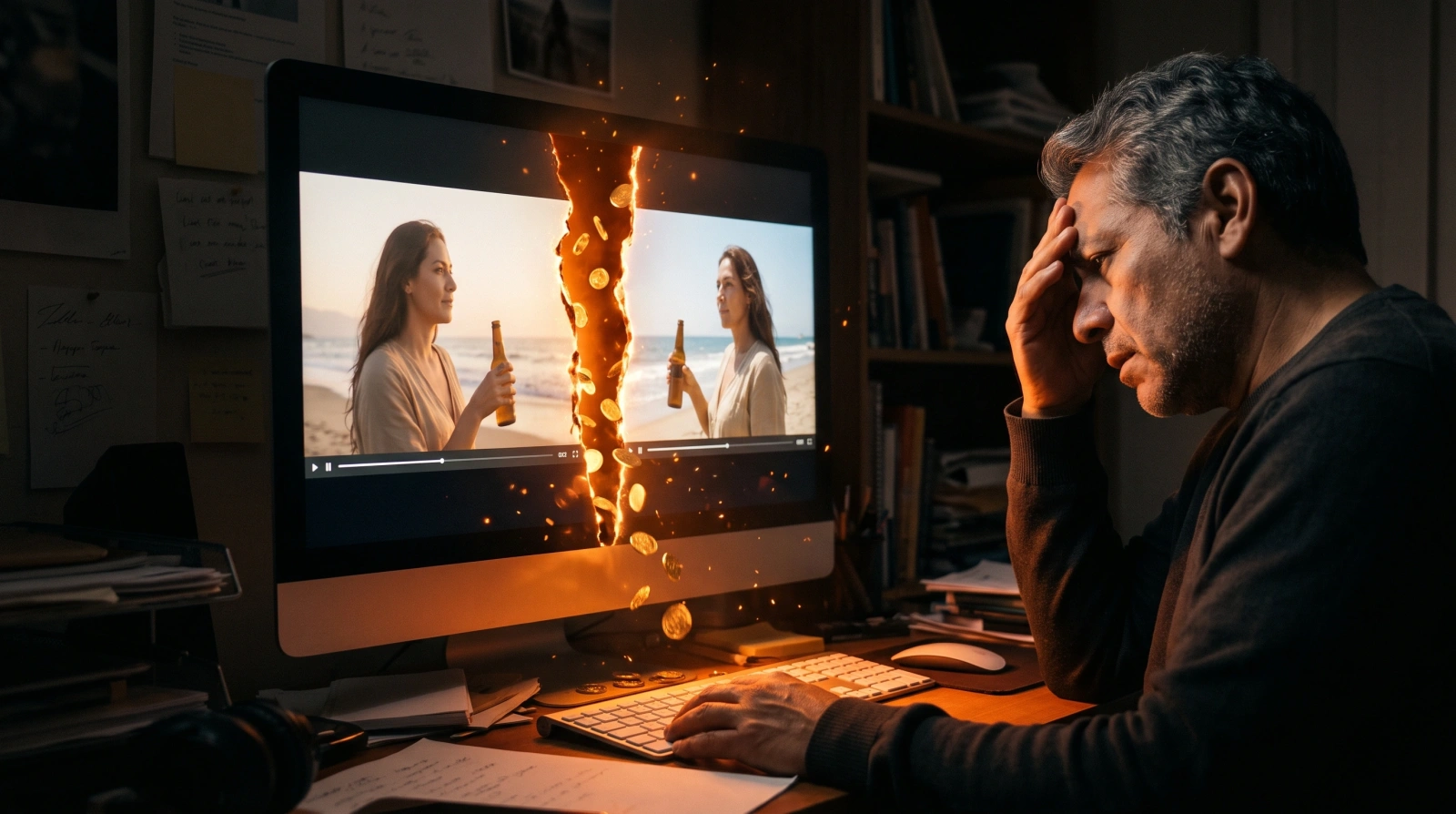
You pay for the first clip: she walks along the beach with the bottle in her hand, seen from far away. You like it.
You pay for the second: now she is sitting, close up, with different light and the bottle in her other hand. You put the two together and the jump shows in one second.
You pay for a third to fix it. And a fourth.
First the plan, then the payment
A shot plan says, before you spend a cent, what each part of the video shows. For each shot you write:
- what is said;
- what the person does while saying it;
- where the camera is and how close;
- how the camera moves, if it moves;
- the light.
Of the AI video makers we studied, half of the YouTube ones (22 of 44), and the 3 courses and 3 newsletters we read, say the same thing: plan before you pay for the video.
Close talks, far acts
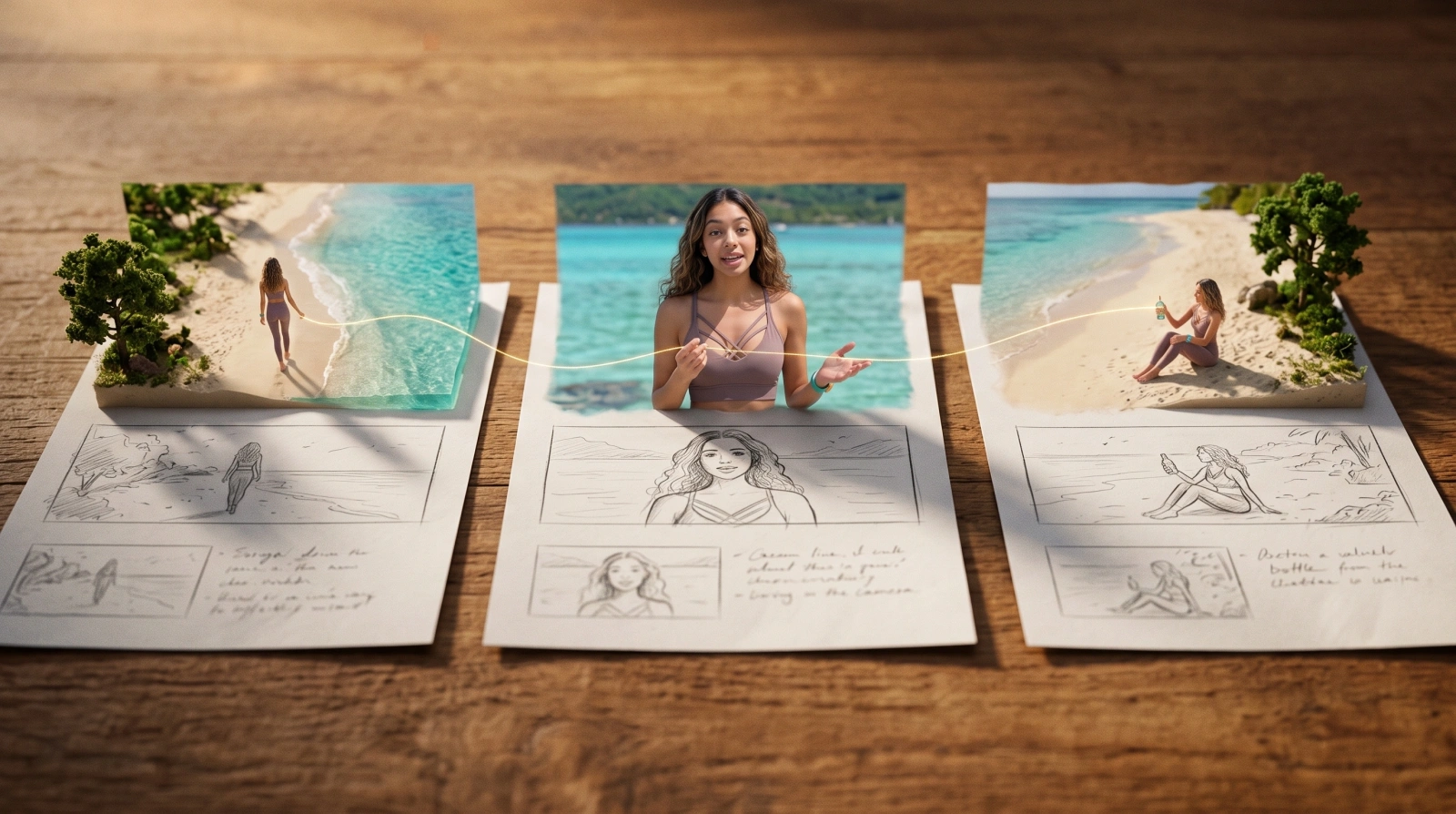
A short video is built from shots of a few seconds that take turns. In UGC Viral Studio, a 30-second video comes out like this:
- Shot 1, far (10 s): she walks toward the sea; her voice plays over it.
- Shot 2, close (10 s): she looks at the camera and talks.
- Shot 3, far (10 s): she sits on the sand with the bottle; the voice wraps up.
One action and one camera move per shot. When a shot asks for many things at once, the picture warps.
Each shot ends where the next one begins
The jump in the example is avoided in the plan. If shot 1 ends with the bottle in the right hand, shot 2 starts with the bottle in the right hand.
And if the video is for a client, the plan is what you show them first. One ad maker puts it this way:
"It's a reassurance for you as a creator that you're not spending any time creating something that the client's not going to like."
Rodrigo Tasca, ad maker