
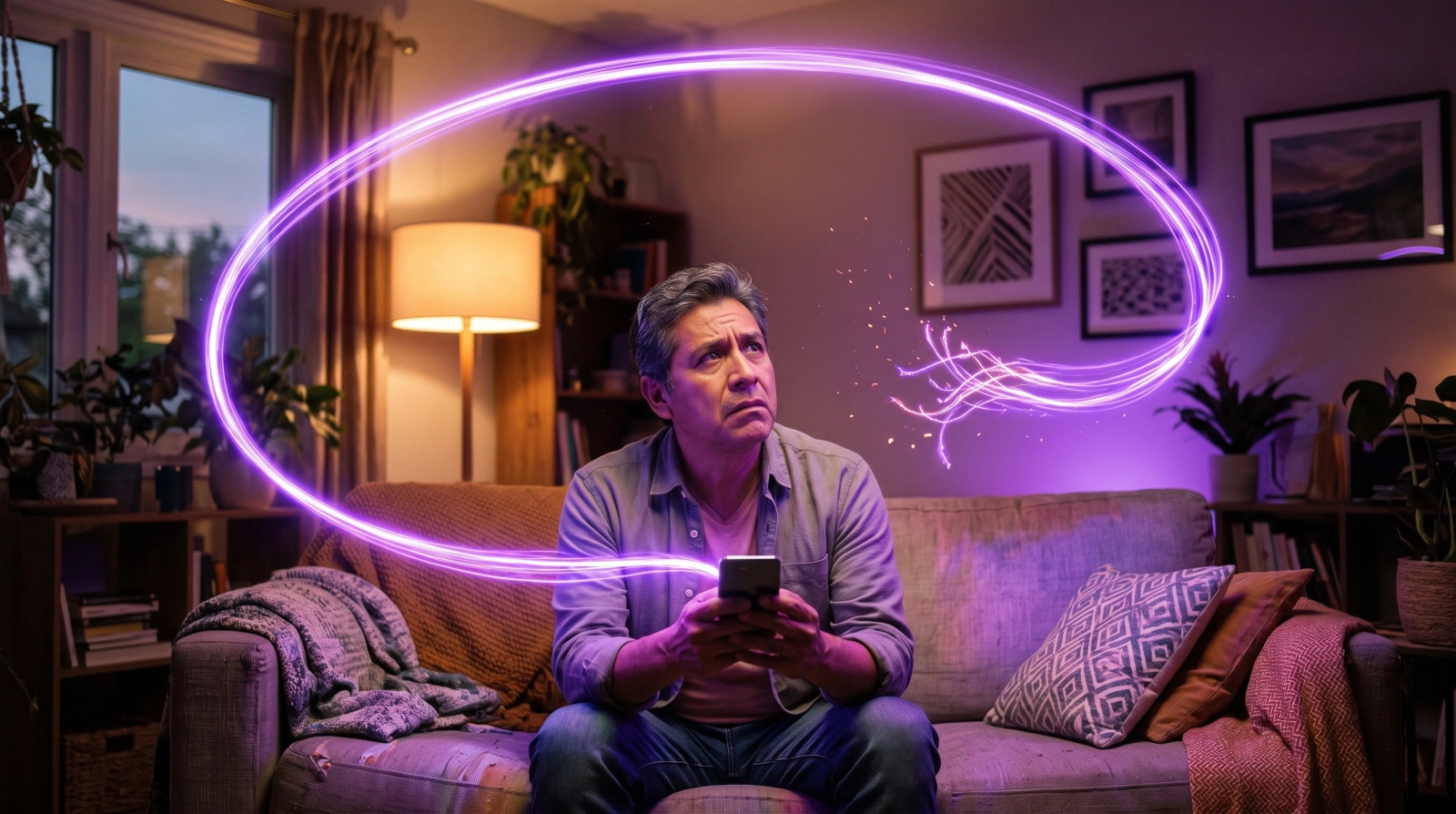
You watched a whole video, from start to finish. At the beginning the man said: "The third tip is the one that saved my garden."
He gave the first one. He gave the second one. And the video ended.
You sat there with the phone in your hand, waiting for the third. You won't watch another video from that account.
An open question makes you stay
What you felt has a name: an open loop. It is a question the video puts in your head at the start and only answers later.
While the question is open, you keep watching. An example in two sentences, one at the start and one at the end:
At the start: "This bottle spent the whole afternoon in the car, in the sun."
At the end: "And look: it's five o'clock and the ice is still whole."
An example made up for this page. In a real video, a sentence like that is only said if it really happened.
Always close it
We counted 63 real approved ads, in English and in Spanish. This is what we found:
It is the closest thing to a law we saw in the whole study. Whoever opens a question answers it. The 2 ads that did not close it had a mistake you could see while watching, just like the video of the third tip.
Make it your buyer's question
A clever question your buyer does not care about catches them for a second, and then they leave. Before you write it, check:
- Would your buyer ask this question in daily life?
- Is the answer in the video, said clearly?
- Does every number or detail you mentioned get its answer?
What you take from this page
Write the ending first: the answer. Then write the first sentence that makes people wait for it. If you know the answer before you start, the opening question almost writes itself.
That way the video delivers what it promised, and the person who watched it trusts the next one a little more.