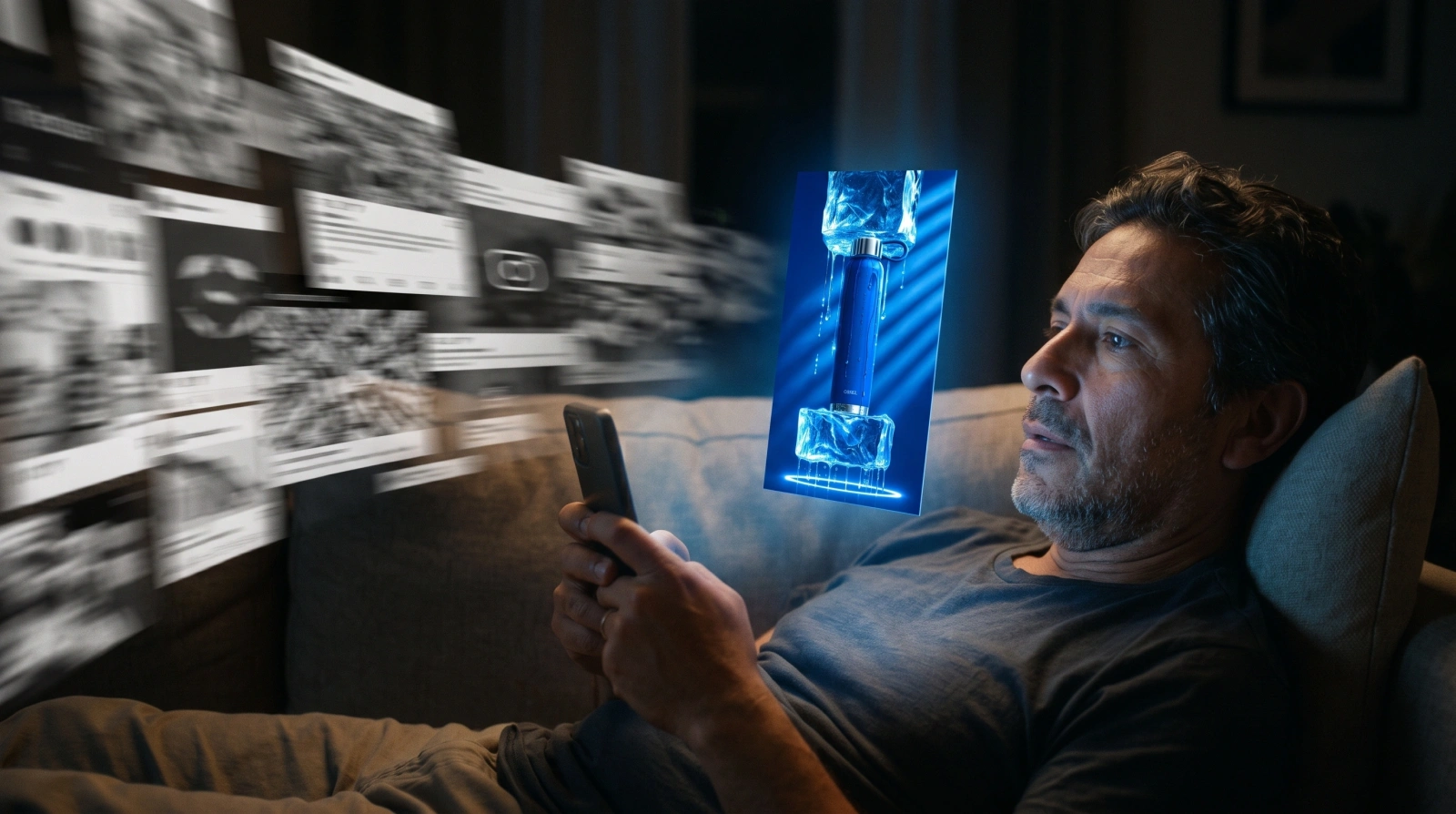
It is night and you scroll through posts with your thumb. A graphic shows up with five lines, three prices, two logos and a phone number. Before you read half of it, you have moved on.
Further down, a blue bottle on ice shows up with four big words. You understood it before deciding whether to stop.
The second one won your second of attention because it said one thing.
One graphic, one job
These are 3 graphics from the same pack, for the same bottle. The brand, OSKEL, is made up, and all 3 were made with artificial intelligence:
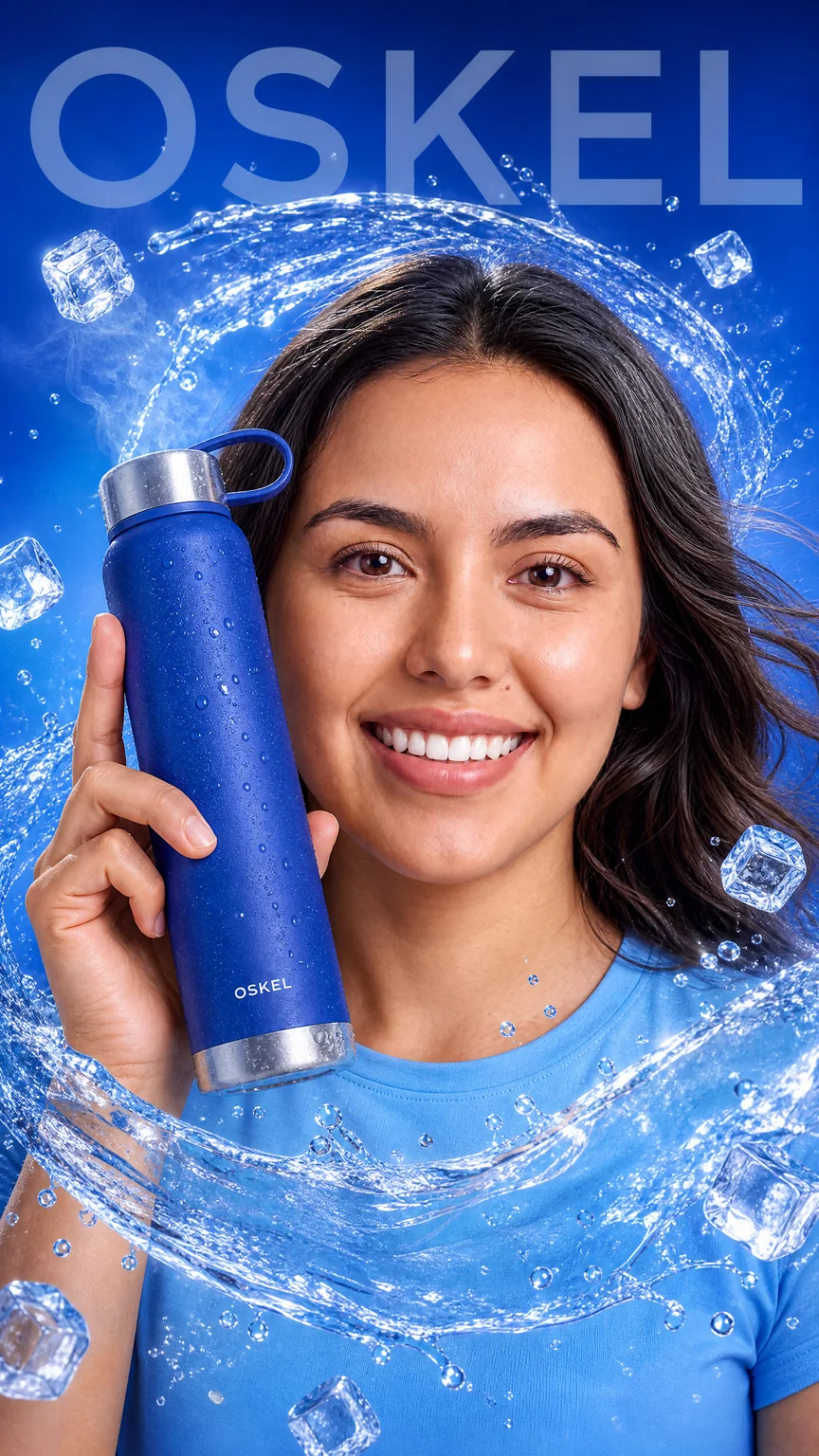
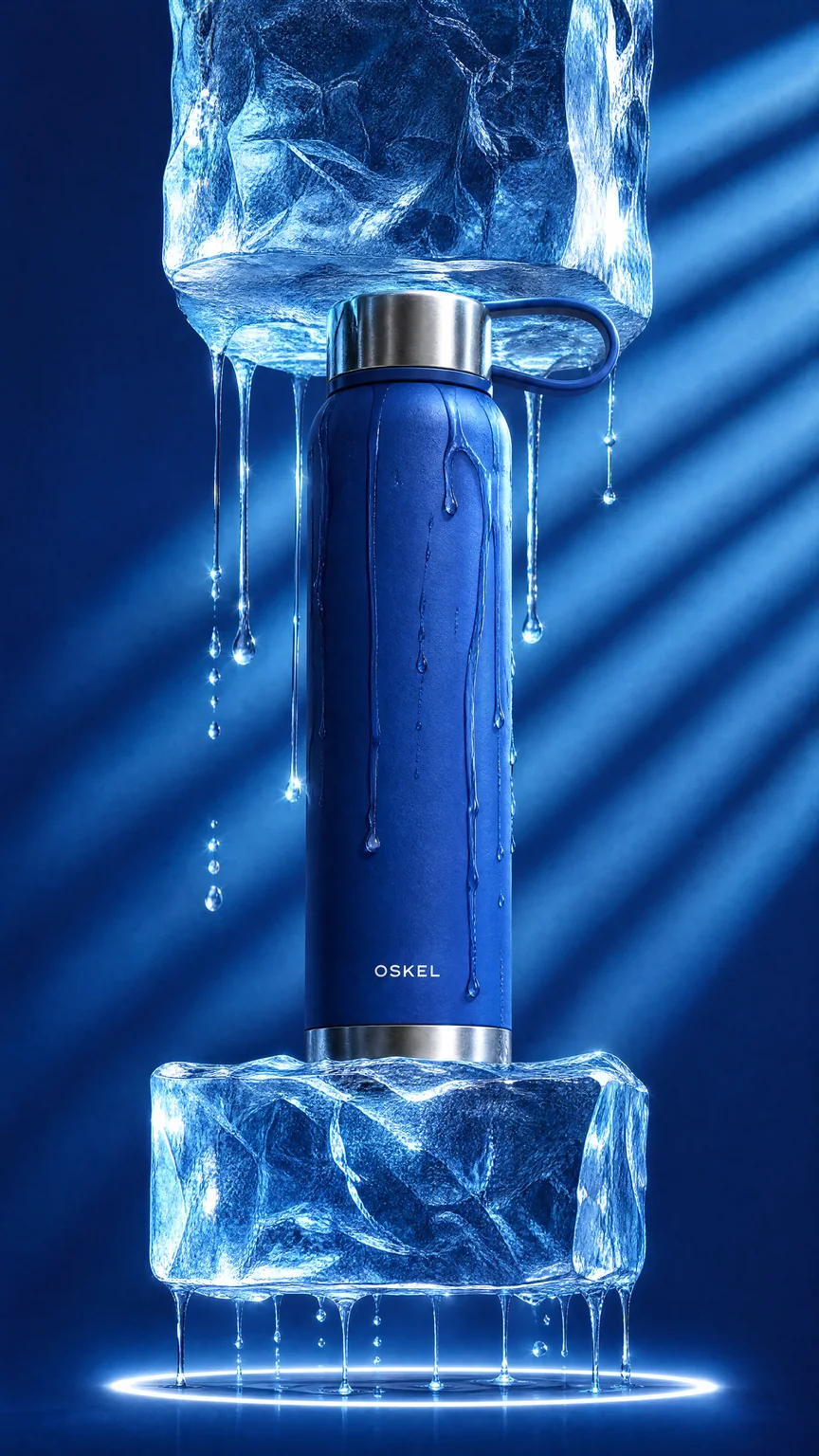
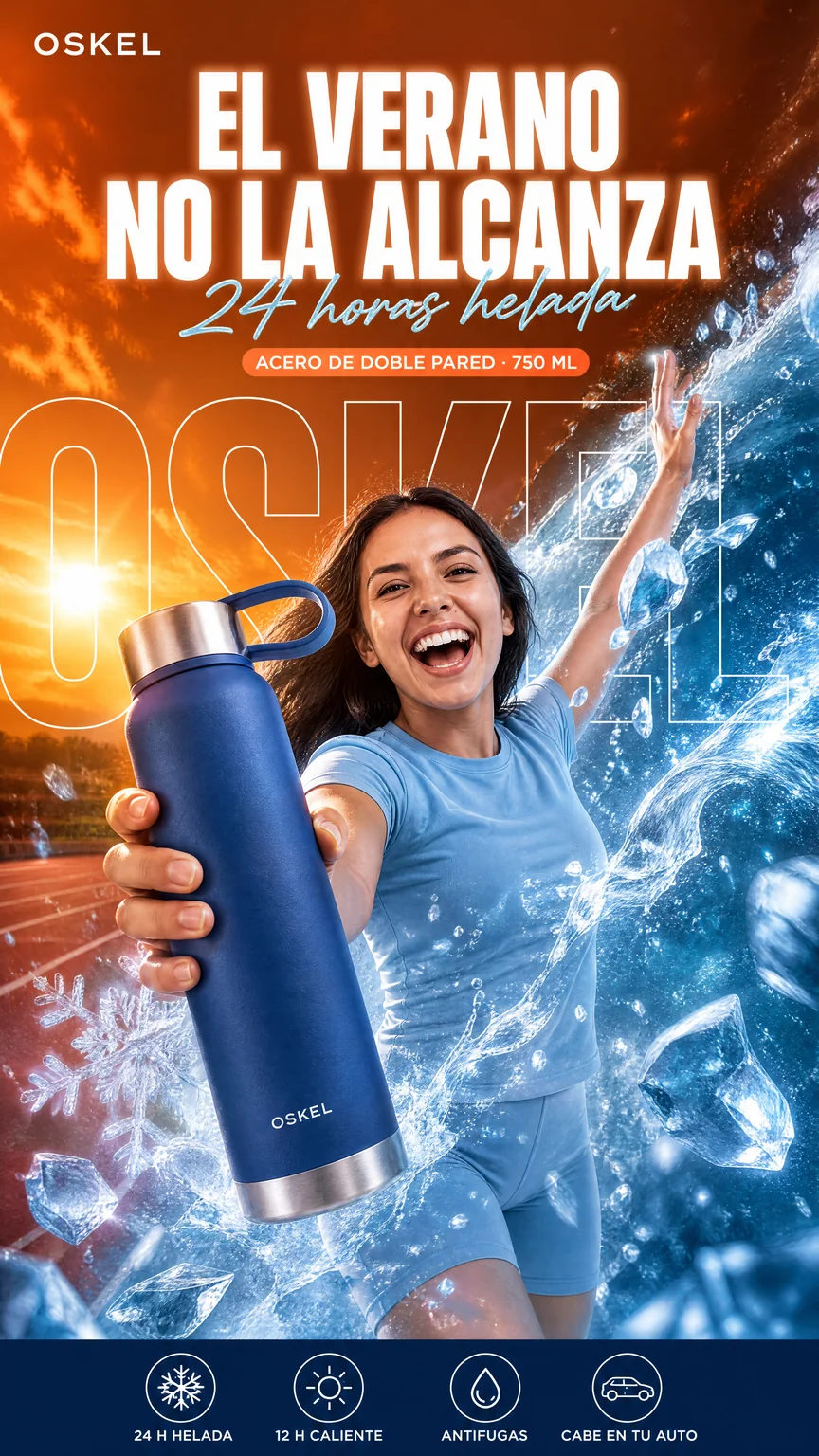
Each one does a single job, and together the three tell everything the product needs to say:
- the first shows a person using it, so the viewer sees themselves there;
- the second shows the product alone, so people remember what it looks like;
- the third says the promise, in big letters.
What can be read in one second
The line on the third graphic has 7 words, and it can be read before the thumb keeps scrolling:
"Summer can't catch it. 24 hours ice cold."
the third graphic of the OSKEL pack
- one single line, short and big;
- the product in sight, big and easy to recognize;
- letters that stand out from the background, light on dark or the other way around;
- the rest in the text below: the price, the address, the opening hours.
The one-second test
- Show the graphic on your phone to someone at home, for one second.
- Take the phone away.
- Ask what it said.
If they answer with the line or the product, the graphic works. If they don't know what to say, it has too many things, and one of them moves to the text below or to the next graphic. Then run the test again with the corrected version.