
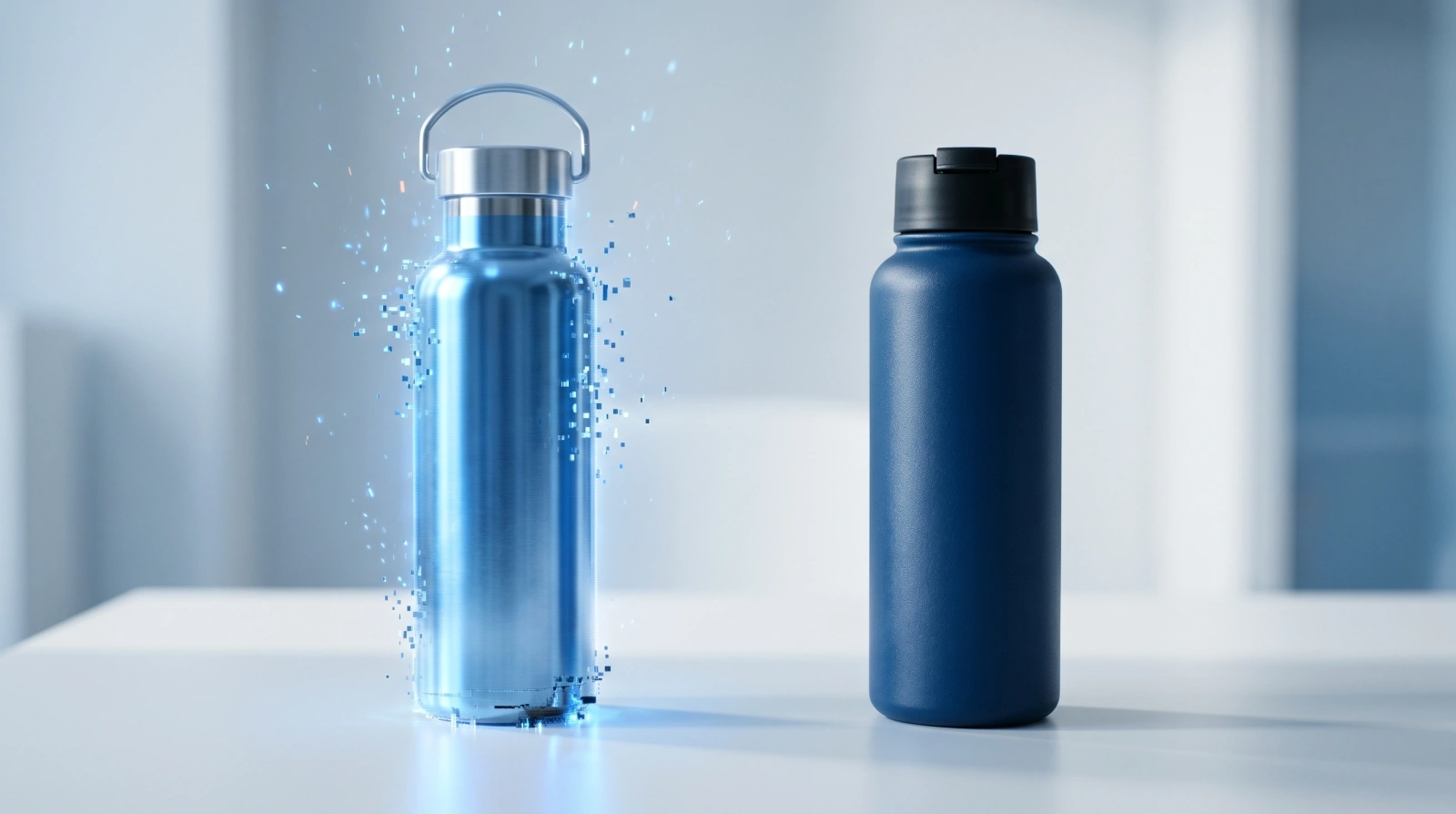
You asked the AI for "a blue thermal bottle, on ice, summer light". The graphic came out beautiful. You send it to the shop owner.
He answers in two minutes: "That's not my bottle. Mine has a black lid and no handle."
He is right. And if he had posted it, the first customer to walk into the shop would have looked for a bottle that does not exist.
Why the AI changes the product
When you describe a product only in words, the AI fills in what is missing with what it imagines: a handle, another shade of blue, letters that look like the brand.
With a real product, every invented detail is a false promise to the person who buys it. The UGC coaches we studied make it a rule:
"AI must not invent benefits, testimonials, clinical data or results."
from the rules we gathered from UGC coaches
The reference photos
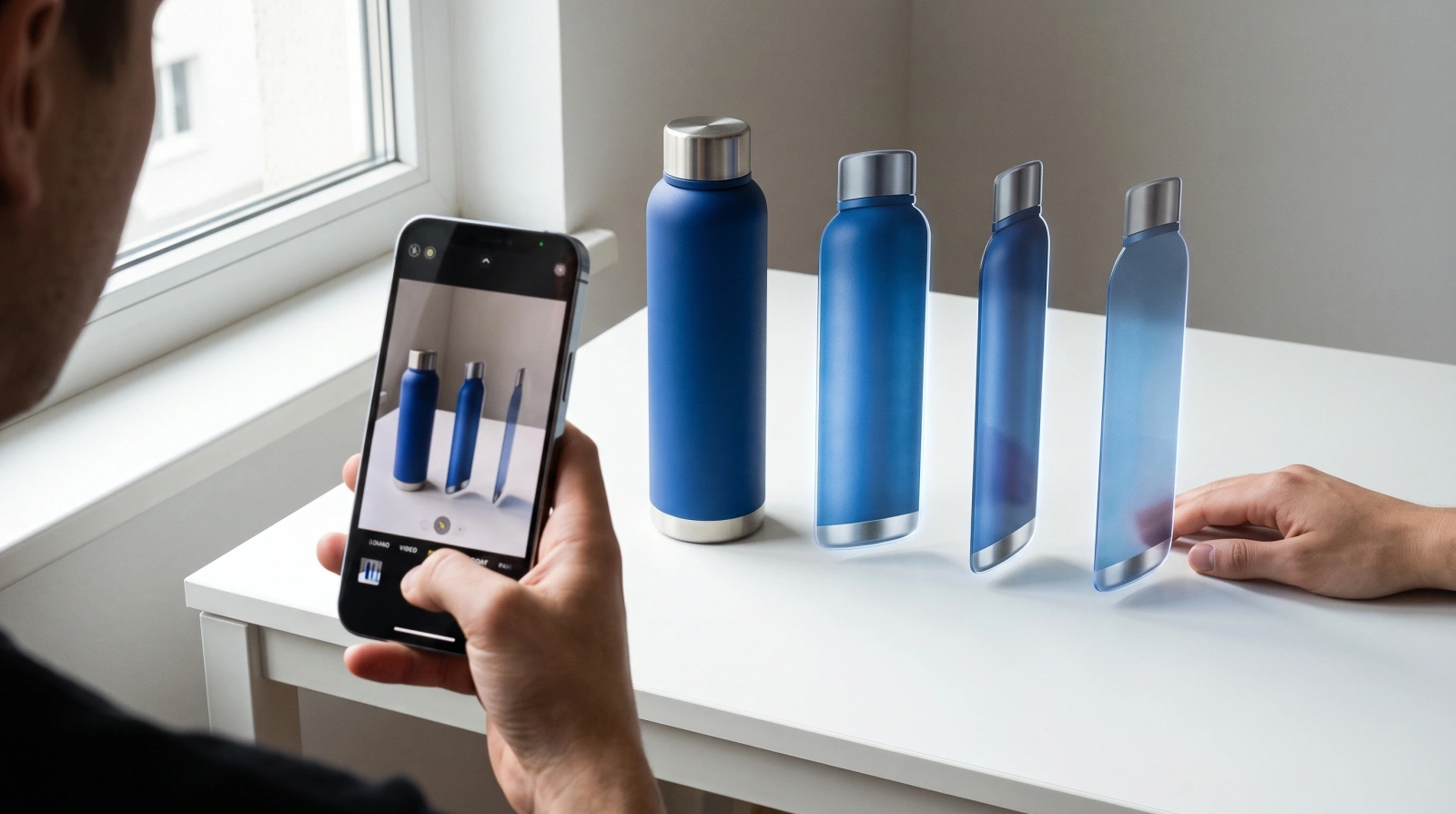
The way out is to give the AI real photos of the product as a reference: the image it has to respect. A phone is enough:
- one from the front, with the whole label readable;
- one from the side, for the shape;
- one next to a hand, for the size;
- in daylight on a plain background, with no filter that changes the color.
Compare before you approve
Put each graphic next to the real photo and check:
- the shape and the parts: lid, handle, base;
- the color, without it getting darker or lighter;
- the letters on the label, one by one;
- what the graphic says: if the bottle does not keep things cold for 24 hours, no graphic says so.
What you take from this page
A pretty graphic of a product that is not theirs costs the business an annoyed customer. And it costs you the client. Real photos come first, before the first graphic.