
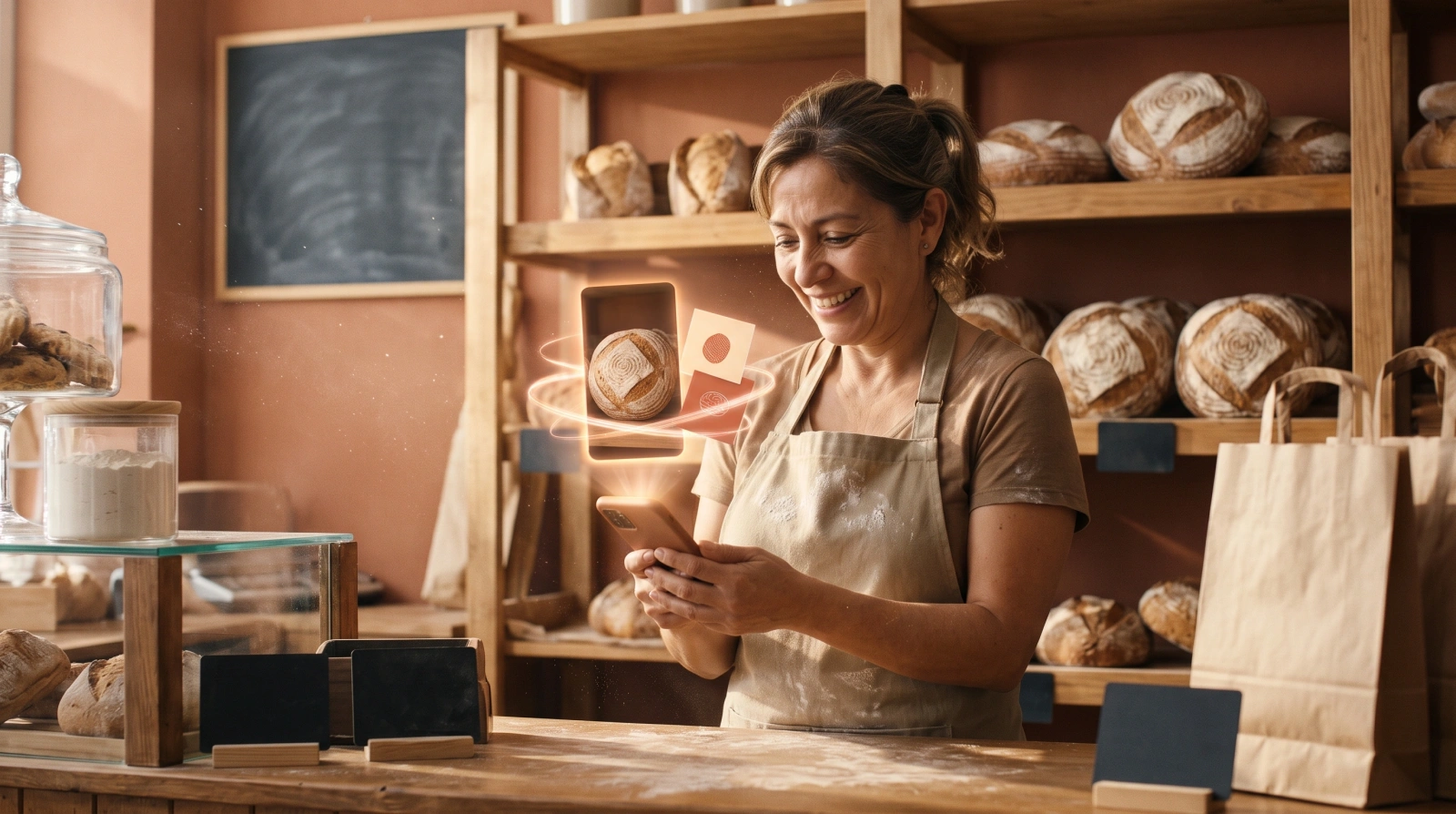
A bakery owner gets two messages on the same day.
The first one says: “I make AI videos for businesses. Interested?”
The second one brings a 10-second video with her own sourdough bread, and 3 graphics for her Sunday offer, in her colors. Below, one line: “I made this for you. It is a sample.”
Which one would you answer?
Why a sample
An owner cannot imagine your work with their business inside it. When they see it done, with their bread and their offer, they have something concrete to answer.
Big companies in the field use the same idea. Icon, a US company that sells UGC ads made by people, lets the client review the work before paying.
“Don't pay until you review 6 scripts.”
Icon, a US UGC ad company
What a sample includes
- A few pieces: one short video and 2 or 3 graphics. Enough for the business to see itself.
- Made from its bible: its real product, its offer today, the way it talks.
- A person created with AI, or the business's mascot. Never the owner's face.
- A sample label, so nobody mistakes it for work already paid for.
Generating those pieces costs cents. What weighs is your time: reading the bible, choosing, checking. That is why the sample goes only to businesses you have already studied and that can pay for a plan.
Free, with a limit
Coaches do not agree on this. One prefers to start by giving work away, because charging very little at first leaves a low price stuck to you. Another prefers small paid jobs, even at 30 dollars, over unpaid samples.
The sample on this page is short, is for one business only and sets no price. The offer with a price comes when the owner replies.